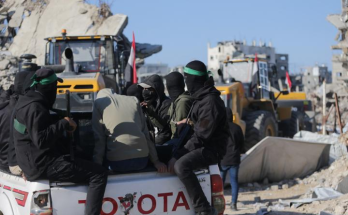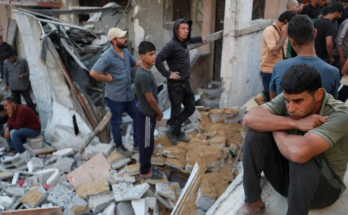
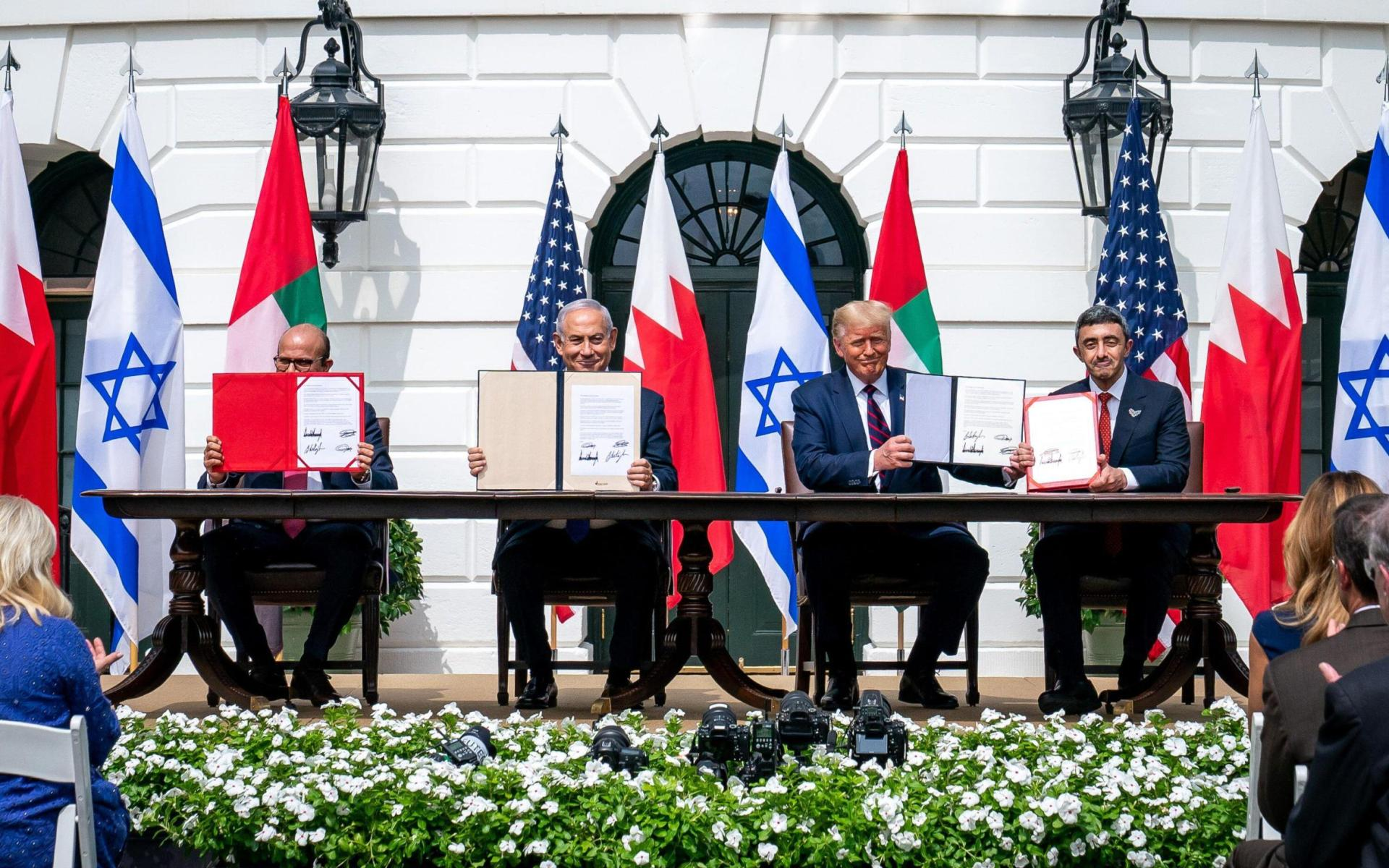
A new generation of unelected leaders has brought many Gulf states into closer alignment with Israel. Photo: AC NewsPhoto / Alamy Stock Photo
It is no longer a secret that the Zionist project would not have lasted a single day in Palestine were it not for unlimited Western support and the open and covert betrayal of certain Arab regimes that chose to align themselves with the occupation instead of supporting their people and the nation’s core cause. From the very beginning of its establishment, this entity possessed no historical, religious, or moral legitimacy; its strength was never its own, but rather that which has been supplied to it from abroad.
From 1948 to the present, the entity’s survival equation rests on three pillars: American weaponry, European diplomatic cover, and the political and economic pressure exerted by Western powers to protect it from any accountability or sanctions. The myth of “Israeli superiority” is nothing more than a media and political construct designed in Washington, London, Berlin, and Paris to justify bailing it out of every crisis it faces.
And when that external shield falters, even partially, the entity reveals itself for what it truly is: fragile, bewildered, and incapable of resisting a resolute people whose will remains unbroken. Every crisis that Western capitals experience—whether electoral, economic, or political—immediately impacts the entity’s capacity to continue its aggression, since its survival is organically linked to sources of funding, weaponry, and protection that it itself lacks.
For their part, the Arab regimes that chose the path of betrayal went from silence to direct or indirect participation in supporting the occupation. Normalization was never a popular decision, but a political imposition whose objective is to appease Washington and protect the regimes, not to defend Palestine or serve the nation’s interests. These governments have turned against their own people, who continue to consider Palestine their primary cause, and against the collective conscience of the nation, which has never accepted abandoning Jerusalem, the refugees, or the right of return.
Today, with the advance of the resistance in Gaza, the West Bank, and within Palestine, and with the increasing international isolation of the entity, a central question arises: what remains of this project if the West stops supplying it with weapons and protection? And an even deeper question: would it be able to withstand even a single moment if the Arab peoples raised their voices above the silence of their rulers?
The truth is clear, and Tel Aviv, Washington, and the normalizing states know it: the Zionist project, without Western support and without Arab betrayal, possesses no element that guarantees its survival. It is a temporary colonial project, living on life support, and its fate is tied to the fate of the powers that created and sustain it. And the weaker those powers become, the closer its fall will be.
But what some ignore, or pretend to ignore, is that there is only one force that no power in the world can crush: the strength of the Palestinian people. A people who have not abandoned their land despite massacres, sieges, murder, displacement, and hunger. A people who resisted in the refugee camps as they resisted under occupation, transforming their pain into a memory of struggle that spans generations.
In this sense, the end of the Zionist project is not a question of “if,” but of “when.” A project that depends on external forces cannot endure in the face of a people who have not been defeated, and in the face of a nation that, despite all it has endured, continues to consider Palestine part of its identity and its dignity.
Palestine endures as long as its people endure.
The occupation is destined to disappear, however long the road may be.
And history, which has brought down all colonial projects, will also bring down the Zionist project.
Palestinian Union of Latin America (UPAL)
November 19, 2025