Strategic confusion: Trump admits Iran nuclear ‘obliteration’ claim was a bluff. By: Masoud Khalili
By Masoud Khalili
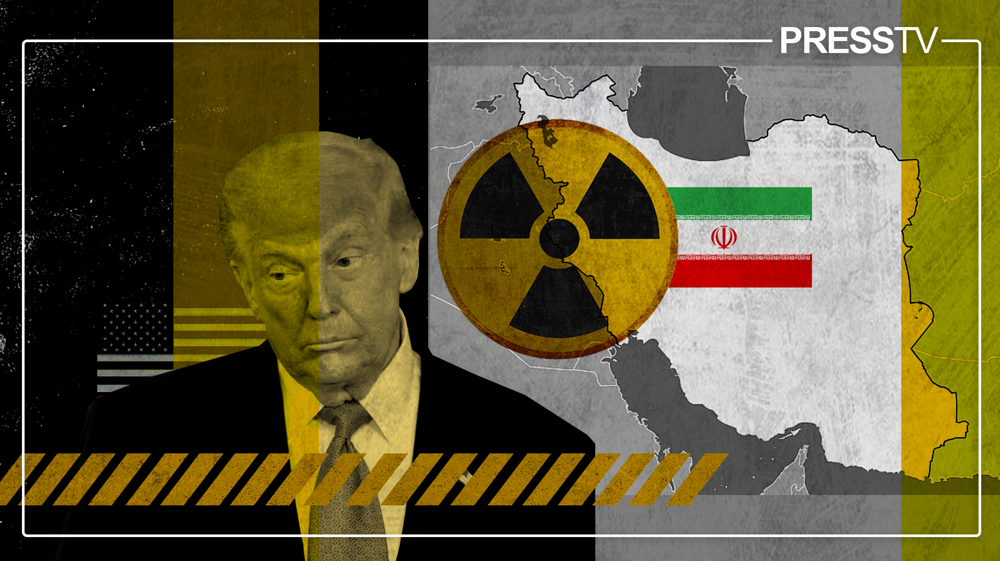
The man, who not too long ago bragged that he had “completely and totally obliterated” Iran’s nuclear capabilities, has, in a quiet, consequential admission, undone that boast.
In a Fox interview on August 15, 2025, US President Donald Trump admitted he “didn’t want to include the decimation” of Iran’s nuclear facilities in his self-proclaimed military triumphs.
“Because I don’t consider it necessarily conclusive,” he said. That hedge is not a minor footnote. It is the unvarnished confession that the “strategic annihilation” collapsed into uncertainty the moment independent facts and leaks punctured the narrative.
This is not political theater. It is the visible cracking of a long-running Western playbook, which is public maximalism working hand in hand with private ambiguity.
Washington and its partners in crime have for decades relied on covert operations, targeted sabotage, military invasions, and dramatic headlines to create the impression of finality.
That impression, however, has repeatedly outpaced reality. The pattern – from flawed covert designs to cyber-warfare and assassinations – has failed to produce desired results. Trump’s new retreat is evidence that the old self-confidence is fraying.
Just look at the recent week. After the Alaska summit and the sit-down with Fox’s Sean Hannity, US spokespersons and security officials found themselves juggling contradictory lines: Presidential claims of near-total decisive success; intelligence leaks that had already emerged indicating only a limited setback in Iran’s nuclear energy program; and a State Department that answered reporters with careful evasions rather than conclusive proof.
This muddled choreography – a public blaze followed by closed doors and caveats – exposes a yawning chink in Washington’s much-vaunted armor. Where there is smoke, but no verified fire, the claim of “annihilation” waxes into admission of failure.
A history of failures
History supplies the template. Stuxnet, the celebrated cyber-weapon, was a headline triumph in 2010, but it did not end Iran’s peaceful nuclear energy program.
Nor did the assassination of top nuclear scientist Mohsen Fakhrizadeh in 2020 or many others before him push back Iran’s nuclear program. It only expanded and flourished.
These are just a few examples, but each episode should remind us: Sabotage can at most impose cost, not capitulation.
The political utility of “obliteration” is potentially immediate: It swiftly helps throw an aura of justification around brinksmanship, may well rally domestic audiences, and could significantly advance normalization of coercive measures.
But strategic credibility requires verifiable effects: Physical destruction of capability where restoration is impossible or prohibitively expensive.
Leaks and independent assessments published in June showed that the US strikes had, at best, delayed Iran’s peaceful uranium enrichment work by months, not years.
If Washington’s own intelligence community cannot agree on the permanence of damage, then the political claim becomes the only currency – and political currency is ephemeral.
Tehran, for its part, has not been idle throughout the drawn-out history of Western sabotage and direct military aggression. Repeated sabotage and targeted killings have strengthened the resolve to continue the path of martyred scientists.
A saboteur blitz against the Natanz nuclear facility in central Iran in 2021, for instance, prompted investments in fallbacks and operational security. Iran’s intelligence services have also repeatedly disrupted hostile networks and seized weaponry linked to foreign spy agencies.
The more dramatic the external attempt at coercion, the more Tehran has accelerated protective measures around its nuclear facilities, turning aggression into resilience.
This is the paradox of coercive sabotage: It could momentarily alarm a population, but it can also reinforce national unity and technical improvisation.
How should Trump’s hedging be perceived
So, how should policy-minded individuals and the resistance media perceive Trump’s latest remarks?
First, as proof of failure, not happenstance. Public proclamations of “annihilation” require corroboration; the absence of it is an evidentiary victory for Tehran.
Second, as a moral indictment. A so-called “superpower” that inflates battlefield outcomes to mask limits is a “superpower” losing strategic coherence.
Third, as doctrine: Deterrence in the 21st century is not only the capacity to strike, but the capacity to survive and adapt after that. Iran’s resilience is for everyone to see today.
Crucial strategic takeaways for Tehran
One, never let the adversary convert ambiguity into intimidation.
When Washington’s words wobble, the truth is plain: Doubt has entered the imperial script. Dates, sites, and metrics vanish into silence because sabotage yields delay, not defeat.
Even Fox, after the Alaska summit, hurried away to Ukraine and left the “obliteration” claim to rot in the shadows. But silence is complicity. A strike cannot be judged by press releases or soundbites. It must stand the test of evidence, of history, of scrutiny.
By that standard, the enemy’s boasts collapse into nothing more than noise.
Two, translate any likely vulnerability into deterrence, and then broadcast it duly and deservedly.
Publicize the roll-ups, display the captured networks, and project well-earned defensive adaptations – not to boast, but to debunk the enemy’s cost-benefit calculations.
Therefore, such admissions must be used towards reinforcing doctrine, exposing the bluff, consolidating recovery, and developing deterrence that commands respect.
The enemy can lob bombs. We will respond with patient and righteous conviction as well as legitimate defense and reconstruction. Such a reconstruction that Foreign Minister Abbas Araghchi once suggested would surpass the enemies’ wildest nightmares.
“Facilities and buildings will rise again with time, restored in greater grandeur and strength, even if it takes years,” the top diplomat wrote in an Instagram post on June 28 after attending the funeral of those martyred during the 12-day unprovoked Israeli-American war.
“Iran, my homeland and my very being, is a land estranged from the word ‘surrender.’”
To the regional audience and Iranian public
Propaganda of “triumph” may always tempt one to cower. But this moment is a test of strategic discernment.
Real strength lies in the capacity to absorb shocks, to repair, and to convert aggression into political and defensive advantage.
Iran’s post-Islamic Revolution history shows this dynamic: Every external attempt to disrupt or destroy has been answered by deeper domestic resolve.
Confrontation without clarity is a house built on sand. When the president hedges in public, the truth is simple and clear: The “decimation” was a claim, not a fact.
When the smoke clears, history will remember not the scream of a single headline, but the long, steady heartbeat of a nation that refused to be stopped or intimidated.
The US president’s hedged brag is, therefore, not a scratch on Tehran’s armor; it is a mirror reflecting Washington’s strategic exhaustion.
Masoud Khalili is a Tehran-based writer and strategic affairs commentator.