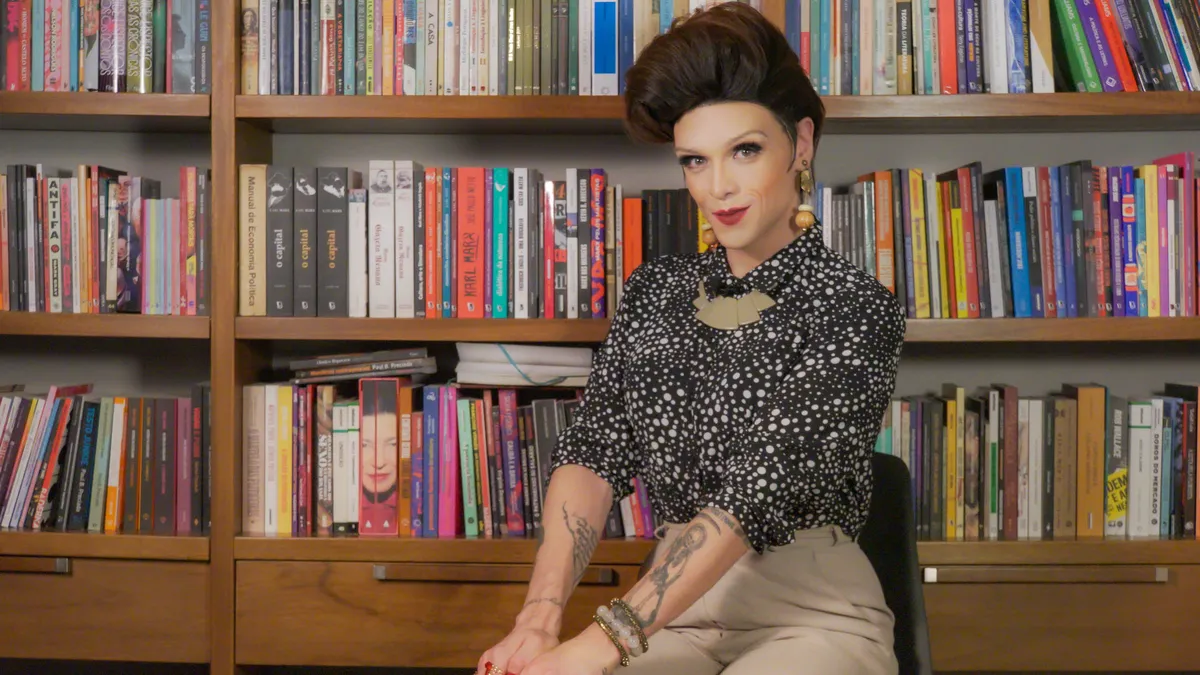
YouTuber and teacher Rita Von Hunty talks about narratives and minority groups - Photo: Disclosure
Rita Von Hunty has broken. The character created by teacher Guilherme Terreri said in a video published on his YouTube channel that he would have to stop. Guilherme and Rita could no longer bear to carry on in a world where genocides are treated as disputes, squabbles, controversies. Their words echoed what Vladimir Safatle wrote in The Alphabet of Collisions: “The true ethical decision here consists in refusing any compromise with the permanence of a historical situation founded on the unhappiness of many. In such cases, happiness ends up as a weapon aimed against the conscience of irreconciliation. It is presented as an individual fortress, but in reality it is realised as capitulation.”
Rita Von Hunty’s farewell video, the name of the drag queen created by Terreri ten years ago, is delicate, sensitive, moving, devastating. Since 2015, Rita Von Hunty has taught with remarkable clarity on culture, literature, politics, philosophy, and sociology. Her channel today has almost 1.5 million subscribers. Speaking with a quaint Italian accent, she educates while entertaining. Her name is a mix: Rita pays homage to Rita Hayworth (1918–1987); the preposition von comes from American burlesque dancer Dita von Teese; and hunty is a slang term used among drag queens to express admiration.
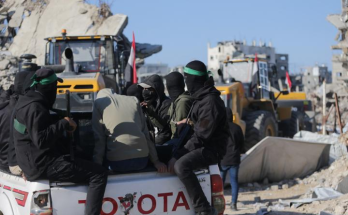
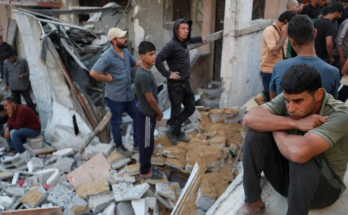
What led Terreri to break? Essentially, as he says in the farewell video, it was the situation of extermination in Gaza.
A few weeks ago, while recording a video about Palestine, Rita collapsed. Terreri explained that the research for the video, combined with a lecture he gave during a vigil in support of the Palestinian people’s right to exist, led him back to a text by Susan Sontag (Regarding the Pain of Others). In it, he came across the author’s bleak hypothesis about contemporary conflicts. Sontag was writing about Bush’s so-called “war on terror”, but she foresaw that real-time exposure to genocide would not generate in people the horror necessary to bring it to an end. It would generate apathy, the normalisation of the absurd.
In his farewell video, Terreri shares data on deaths in Gaza, on the terror provoked by the murder of children, women, and the elderly. With a choked voice and sorrowful eyes—the reverse of the character he created—the educator made no effort to hide his pain. For him, Gaza signals a kind of end of times. At least, the end of an era. “Gaza is the end of the possibility of believing in human rights,” he says.
It was while preparing the lesson script on Palestine that Terreri realised he could not go on. He could not pass through this historical moment as if life remained the same. He was overwhelmed by a wave of reality that brought him to his knees, leaving him breathless. And the difficult decision was made. Time to recover, to reorganise, to rest, to seek new perspectives, other strengths, another dimension in which to place trust in what we cannot yet see.
I turn again to Safatle: “Ethics has become a lesson on how to fall and how to break. There are moments when the most important thing is to know how to fall. For we were made to break.”
For ten years, Terreri has been planting seeds. Others will now carry out the harvest needed for the struggle to continue. Guilherme Terreri will rest and reconnect. He has said that one day he may return. We wait, knowing that what truly matters is to continue for and with one another. These are brutal times unlike any our generations have lived through. We shall face what our ancestors faced before us, what we thought we would never again have to confront. Ancient monsters in new clothes.
To those who break, our solidarity. Struggle takes place both in action and in pauses to regain breath. Thank you for everything, Rita. Guilherme, you have my affection.