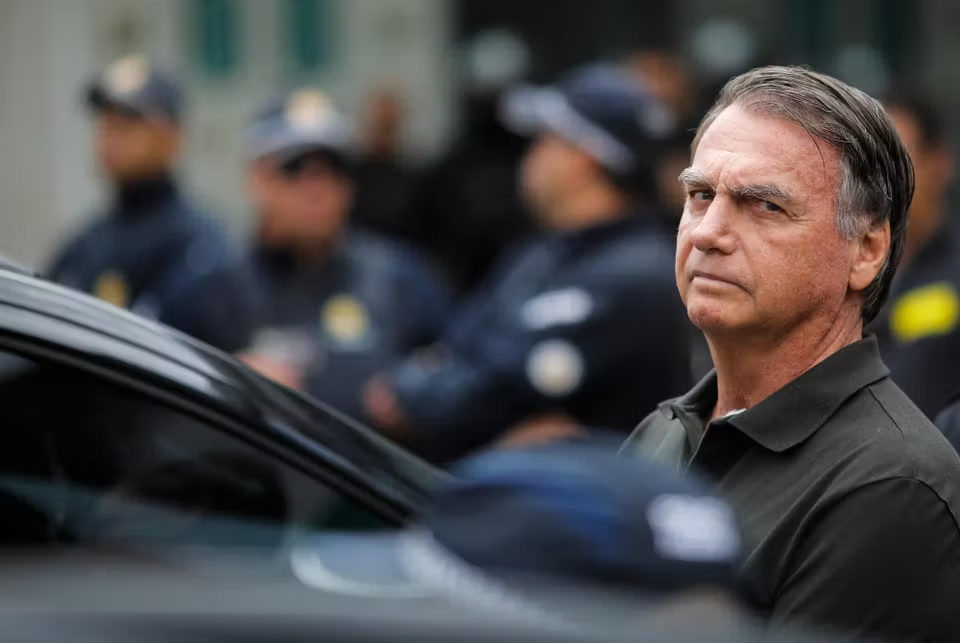
Former Brazilian president Jair Bolsonaro leaves the DF Star hospital in Brasilia on September 14, 2025, after undergoing a series of medical examinations, as he remains under house arrest. SERGIO LIMA / AFP
By Mohammed Hassan Abdullah
Brasília, Federal District — On the morning of Saturday, 22 November 2025, the Federal Police carried out a preventive arrest warrant against former president and far-right political figure Jair Messias Bolsonaro, under order of Supreme Court Justice Alexandre de Moraes.
The decision was issued following evidence of an attempted escape and a breach in the electronic monitoring system installed while Bolsonaro was serving house arrest since August of this year.
This new arrest does not refer to the prison sentence already imposed on the former president, who was convicted in September to 27 years and 3 months in a high-security facility for attempting to overthrow the democratic order, criminal organisation, violent abolition of the rule of law and related offences.
The latest court order was issued after the Federal Police recorded an alert at 12:08 a.m. indicating tampering with the electronic ankle monitor.
Attempted escape and police operation
According to the judicial order, there is evidence suggesting preparations for an international escape route. The automatic alert triggered by the monitoring device led Federal Police teams to reinforce surveillance at the residence where the former president was serving house arrest.
The property is located roughly 13 kilometres from the United States Embassy, where his son Eduardo Bolsonaro — also under investigation — is currently residing and considered a fugitive.
Minutes before the police operation took place, Senator Flávio Bolsonaro published a message on social media calling supporters to a “prayer vigil” outside the property — an action which, according to Justice Moraes, could function as a social barrier or distraction enabling resistance or escape.
Political history and ideological profile
Bolsonaro (PL) far-right Brazilian leader is widely recognised by researchers, democratic institutions, human-rights monitors and specialists in extremism as a political figure aligned with contemporary far-right authoritarianism with characteristics associated with neo-fascism. Throughout his presidency and political trajectory, Bolsonaro and his administration made recurrent use of symbols, rhetoric and strategies historically connected to European fascist movements.
Documented parallels include:
- Adoption of the slogans “God, Homeland and Family” and “Brazil above everything; God above everyone”, adapted from mottos used by Italian fascism and by the German Nazi regime.
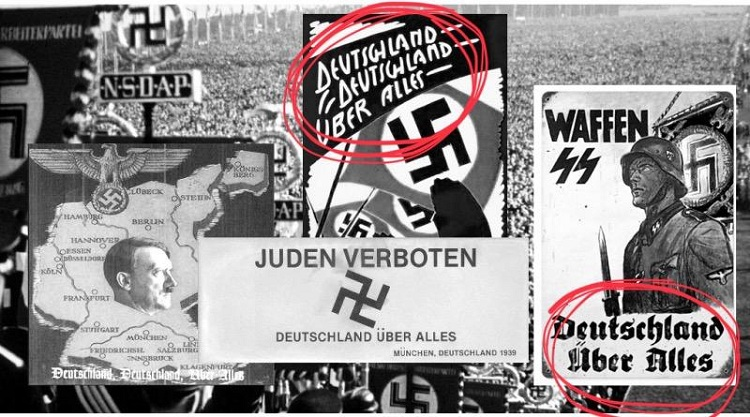
"Deutschland über Alles" (Germany above all), Hitler's slogan. "Brasil acima tudo" (Brazil above all), Bolsonaro's slogan.
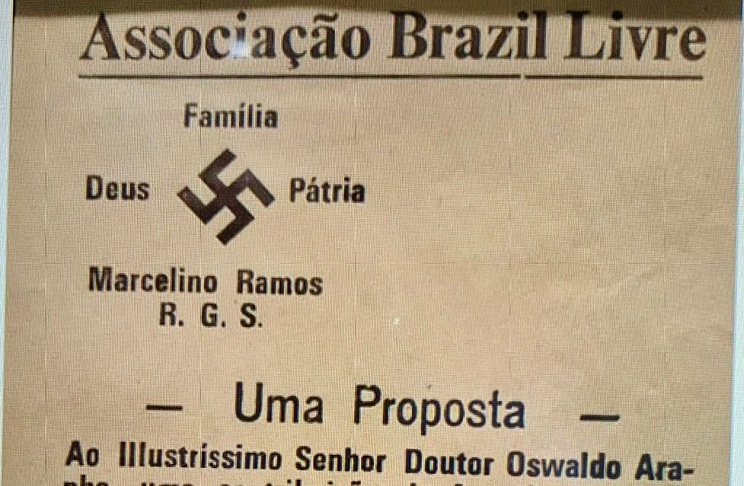
Integralists used the three words most invoked today by the Brazilian far right: God, Fatherland, Family.
- A public episode involving Roberto Alvim, then Special Secretary for Culture, who reproduced both the aesthetics and near-identical wording of a speech by Nazi Propaganda Minister Joseph Goebbels during an official announcement. Alvim was later removed from office following national and international backlash.
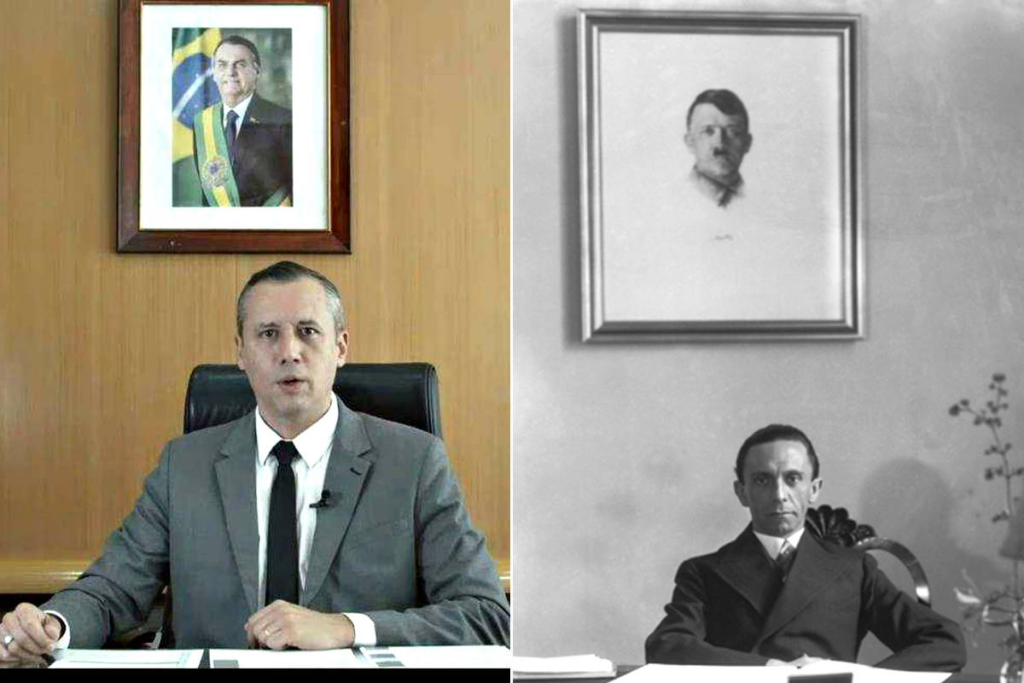
Roberto Alvim, left, and Joseph Goebbels, right. - Atelier Bieber/Nather/Bildarchiv Preußischer Kulturbesitz
- Mass motorcycle rallies (“motociatas”) resembling choreographed public demonstrations used by Benito Mussolini and early fascist groups in the 1920s as performative displays of unified male militarism and street force.
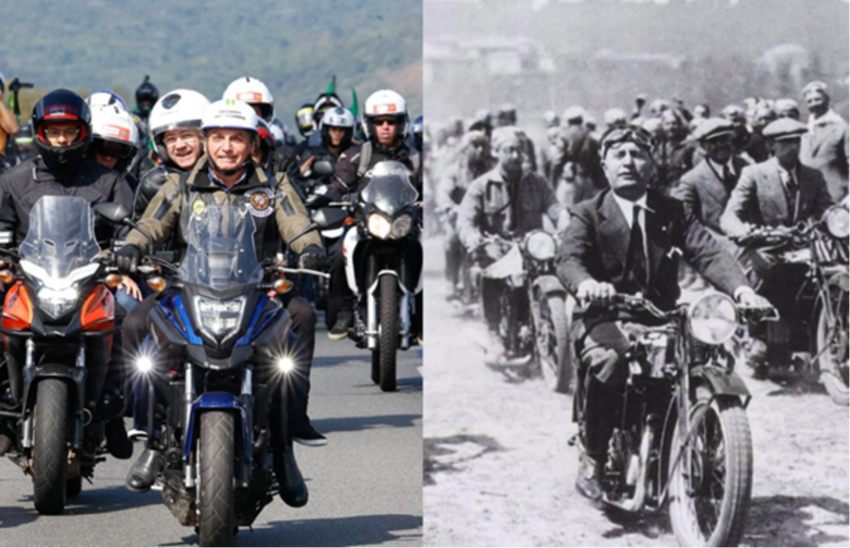
On the left, Jair Bolsonaro on a motorcycle rally with supporters in Jundiaí/SP, in 2021; on the right, Benito Mussolini on a motorcycle rally with supporters in Italy, in the 1930s.
- Repeated use of coded far-right and neo-Nazi symbols among supporters and officials — including livestreams displaying the symbolic drinking of milk linked to white-supremacist culture, and hand gestures associated with modern white-power iconography.
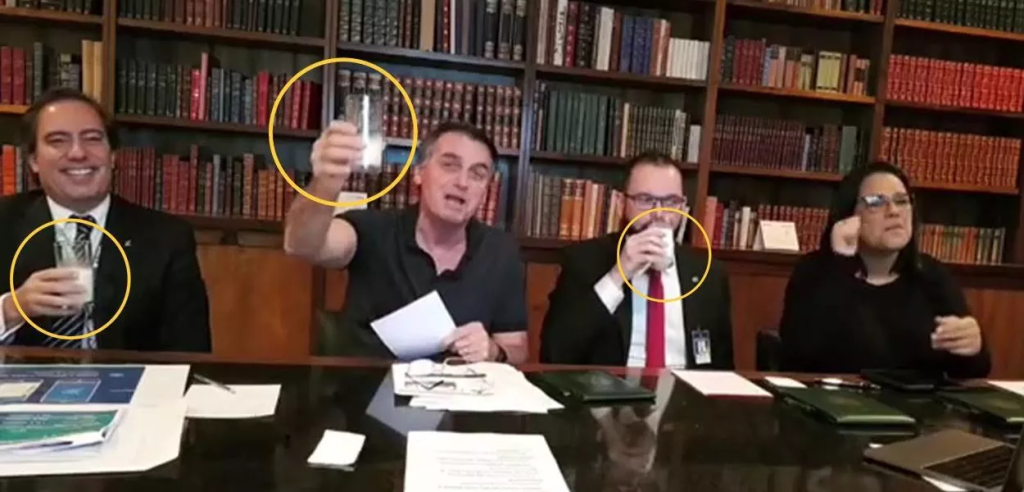
Glass of milk: Bolsonaro uses Nazi symbol of racial supremacy in live broadcast (Photo: Reproduction)
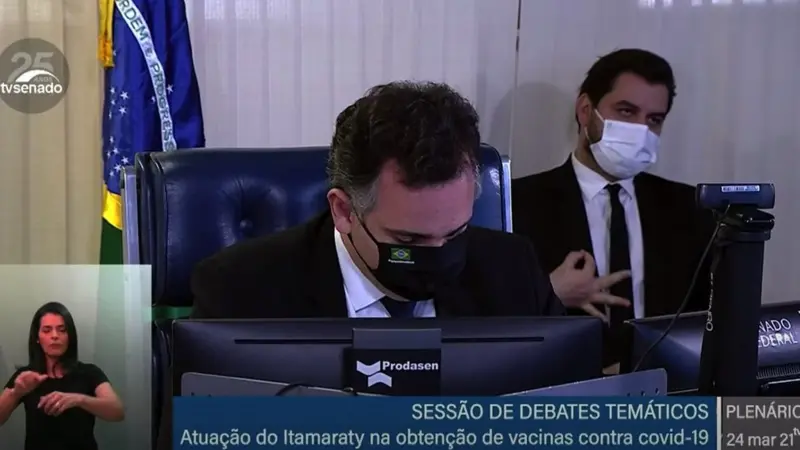
Filipe Martins, an advisor to Bolsonaro, appears in a video making a gesture associated with Nazism. Reproduction/TV Senado
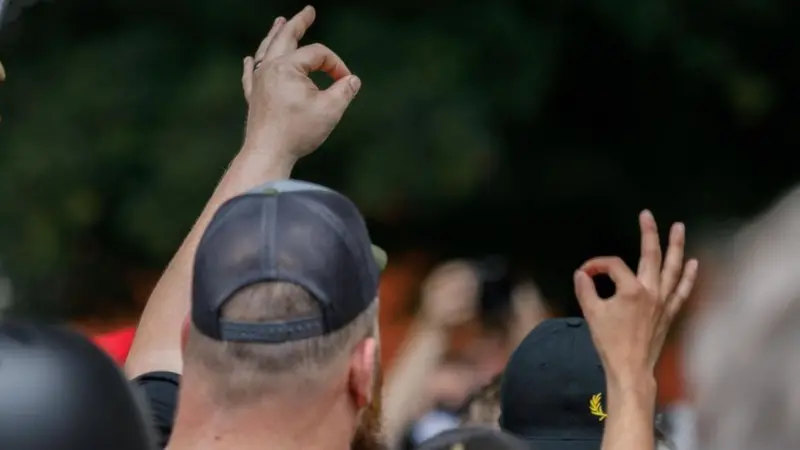
Members of the far-right group Proud Boys make the gesture at an event in the American state of Oregon. Getty Images
His public discourse regularly targeted democratic institutions, journalists, minorities and political opponents — a pattern commonly analysed in authoritarian and fascist governance studies.
Ongoing criminal investigations
In addition to his existing conviction, Bolsonaro remains under investigation in several other legal cases, including:
- Misappropriation and illegal sale of presidential jewellery
- Active corruption and participation in a criminal organisation
- Attempted obstruction of justice
- Involvement in the assassination of councillor Marielle Franco (2018)
According to a court-approved plea-bargain testimony, Ronnie Lessa — who confessed to carrying out the murder — stated that he called Bolsonaro minutes after the killing and said:
“It’s done.”
This testimony remains under judicial evaluation.
- Crimes against humanity during the Covid-19 pandemic, including deliberate delay of vaccine procurement, dissemination of health disinformation and sabotage of public-health policy — actions linked by experts and parliamentary investigations to over 700,000 deaths in Brazil.
These investigations are ongoing and may result in additional criminal sentences.
Network of allies under investigation
The arrest comes amid intensified investigations involving key figures within the political network of Bolsonaro.
Among them:
Carla Zambelli (PL-SP) — sentenced to 10 years in prison for coordinating efforts to hack the National Justice Council database and producing a forged arrest warrant.
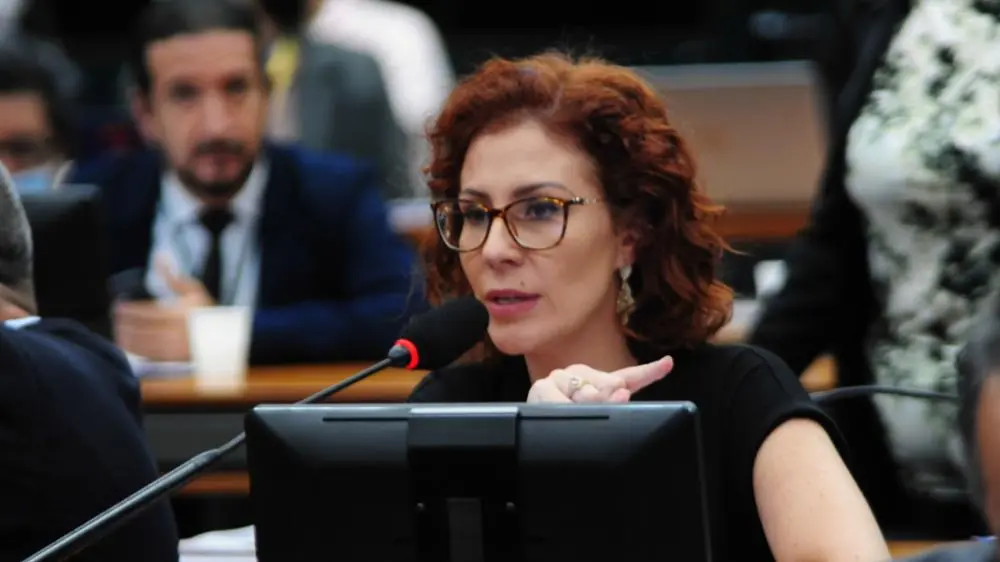
The Italian judiciary accepted the Attorney General's arguments to deny the conversion of the suspended congresswoman's pre-trial detention to house arrest. (Photo: Billy Boss/Chamber of Deputies)
Alexandre Ramagem (PL-RJ) — former director of Brazil’s intelligence agency (ABIN) and federal deputy, convicted of conspiracy to overthrow the democratic order and criminal organisation. He is currently in the United States and is expected to be placed on the Interpol Red List.
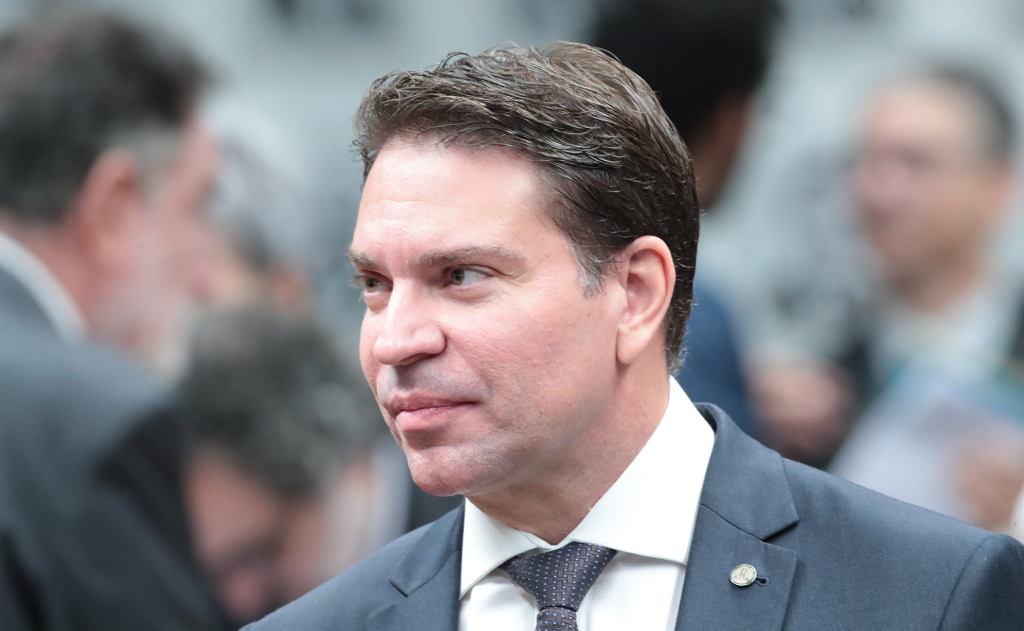
Federal Deputy Alexandre Ramagem (PL-RJ) / Credit: Bruno Spada/Chamber of Deputies
Eduardo Bolsonaro (PL-RJ) — investigated for international lobbying efforts to pressure Brazilian institutions using foreign sanctions, including attempts to trigger the Magnitsky Act, visa suspensions and trade penalties against Brazilian authorities.
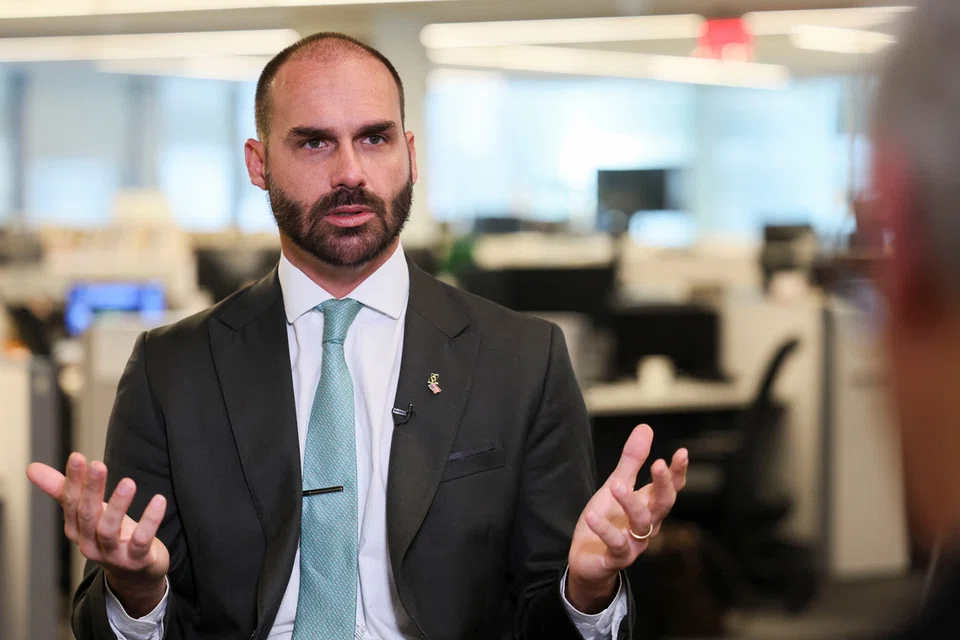
FILE PHOTO: Brazilian lawmaker Eduardo Bolsonaro sits down with Reuters to discuss his efforts to put U.S. pressure on Brazil to halt the trial of his father, right-wing former Brazilian President Jair Bolsonaro, in Washington, D.C., U.S., August 14, 2025. REUTERS/Jessica Koscielniak/ File Photo
Next steps
Bolsonaro will appear before a custody hearing via videoconference on Sunday. His defence has announced it will challenge the decision, alleging political persecution and humanitarian concerns.
The Supreme Court, however, argues that recent actions demonstrate an ongoing risk of escape and continued anti-democratic activity.
Federal authorities are evaluating whether the former president should be transferred to a maximum-security prison facility.