
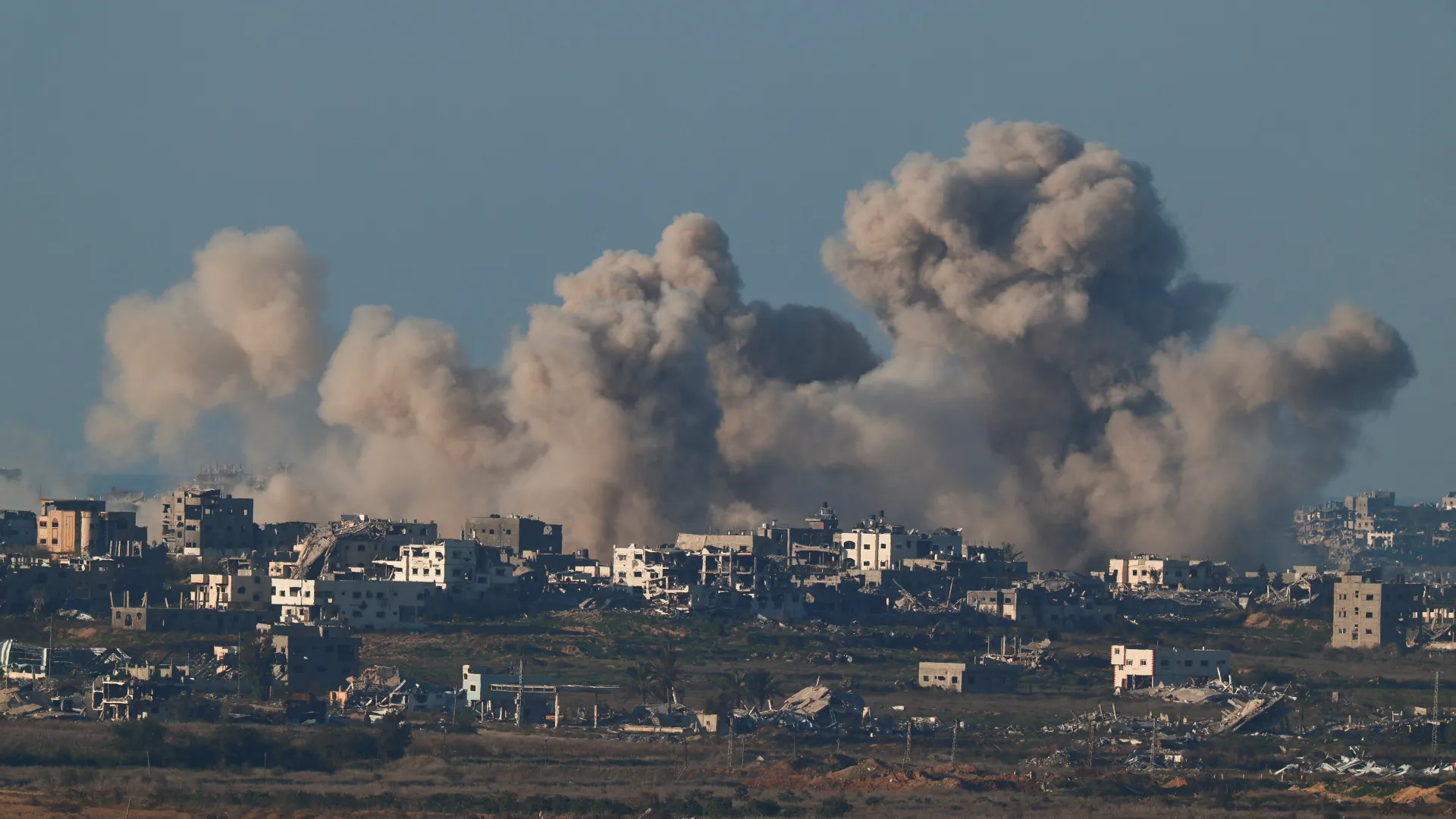
Today, October 9–10, 2025, the international community greeted with a mixture of relief and skepticism the announcement of an agreement establishing the first phase of a ceasefire between Israel and Hamas, accompanied by a prisoner exchange and the promise of massive humanitarian aid deliveries. The images of celebration in Gaza and Israel contrast with the empty streets of so many dead, wounds that have not healed in hours or headlines.
The restrained joy of those who see—finally—a possibility for the bombings to stop and for the entry of food and medicine is understandable. However, that same hope is mixed with a historical mistrust that is not without reason: experience shows that pacts, deadlines, and promises are often broken when they clash with strategic and political interests. In Gaza, where millions have suffered two years of war, patience has run out, and memory recalls other agreements that failed to translate into security or reconstruction.
The most dangerous sign of this fragility is the gap between the text of the agreement and its effective implementation. The announced roadmap sets deadlines—a government vote, partial withdrawal of forces, phased release of prisoners, and the opening of humanitarian corridors—whose compliance depends on internal political decisions, balances of power, and pressure from radical sectors that reject any concessions. This political dependence makes the fine print of the agreement, in practice, fertile ground for non-compliance.
When we speak of “Zionism”—as an organized political force and as a set of state policies—we are not making an abstract criticism: we are pointing to a specific political trajectory. There are historical precedents that show a propensity to condition, delay, or reinterpret international commitments when domestic decisions require it. Therefore, the international community, guarantor countries, and humanitarian organizations must maintain active vigilance and demand clear, verifiable, and sanctioning mechanisms so that the ceasefire does not remain just another announcement.
UPAL welcomes any measure that reduces immediate suffering and facilitates the return to a life of dignity for the Palestinian people. But we cannot confuse hope with naiveté. We demand that words be translated into action: real humanitarian access, rigorous international supervision, the return of displaced persons, and a credible reconstruction and sovereignty plan that goes beyond one-off exchanges. Without these guarantees, the ceasefire risks becoming another temporary pause, while the same dynamics of occupation and violence continue.
Let the Arab community, supportive nations, and multilateral institutions not limit themselves to celebrating headlines: let them compel action. Today, life demands more than promises.
Palestinian Union of Latin America – UPAL
October 10, 2025

Comments are closed.